
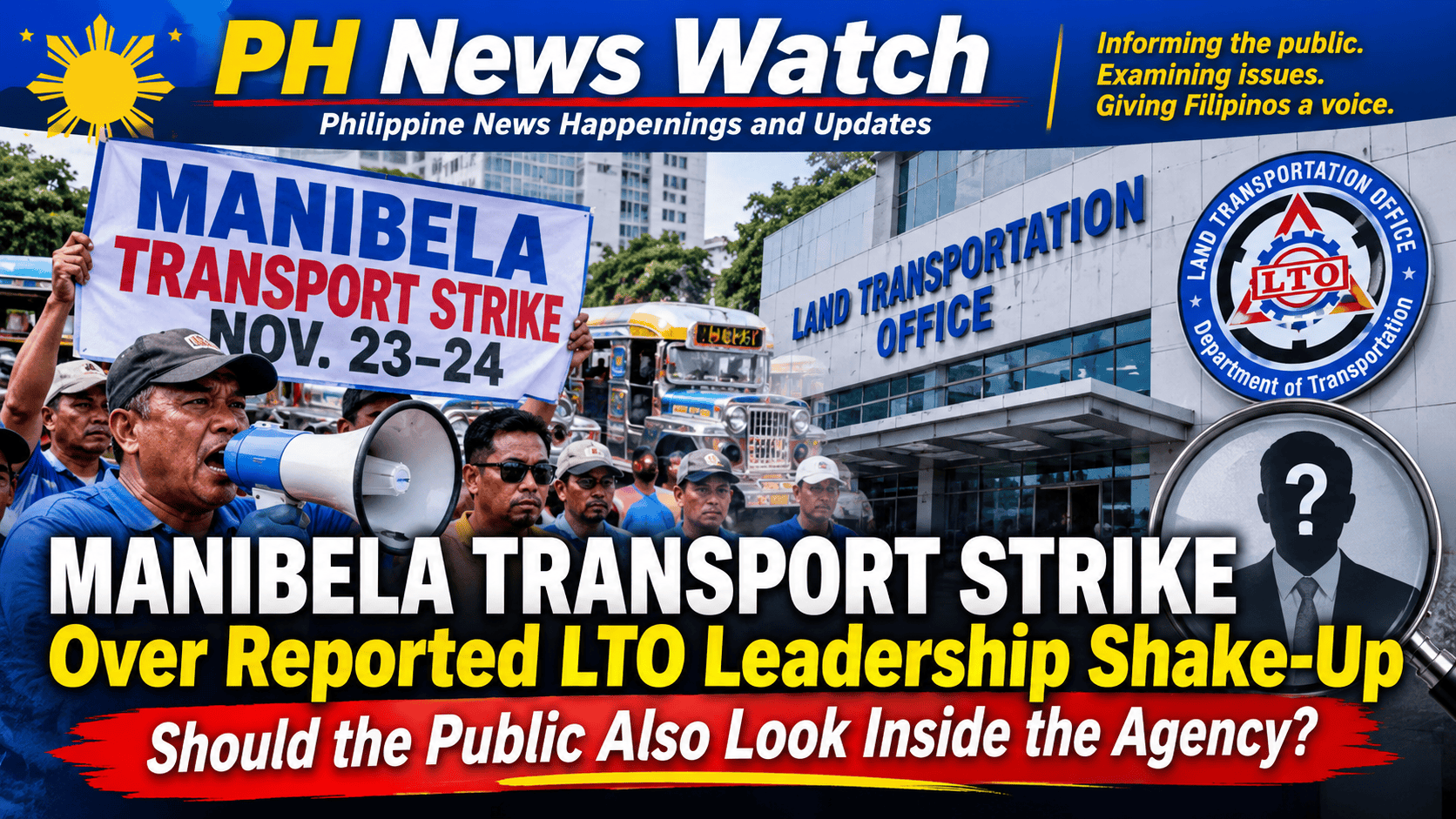
Transport group questions possible LTO leadership change as the controversy raises bigger questions about transparency, accountability, and public trust.
MANILA, Philippines — November 23, 2026
Thousands of commuters in Metro Manila could face transportation difficulties as transport group Samahang Manibela, Mananakay at Nagkaisang Terminal ng Transportasyon (MANIBELA) begins its two-day transport strike on November 23–24, protesting reports of a possible leadership change at the Land Transportation Office (LTO).
The protest centers on the reported replacement of LTO chief Assistant Secretary Markus V. Lacanilao. MANIBELA has expressed support for Lacanilao, citing improvements under his leadership and calling for the continuation of reforms within the agency.
However, beyond the transport strike and the disagreement over who should lead the LTO, another important question deserves public attention:
Are Filipinos looking only at the good things happening outside the agency, or are they also examining what is happening inside it?
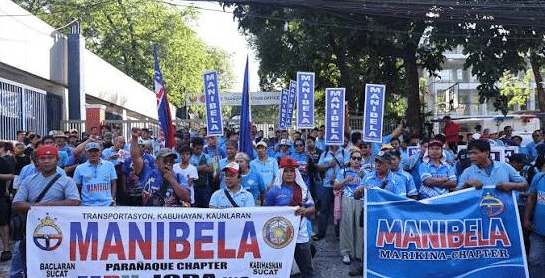
Why Is MANIBELA Protesting the Possible LTO Leadership Change?
MANIBELA national president Mar Valbuena has expressed opposition to the reported leadership change, arguing that the reforms initiated under Lacanilao should be allowed to continue.
The controversy gained attention following reports that Atty. Noreen Bernadette San Luis was being considered as a possible replacement.
However, the reported appointment should be distinguished from an officially confirmed leadership transition. The public should wait for formal announcements from the appropriate government authorities.
For MANIBELA, the issue goes beyond appointing another government official. The group believes that frequent leadership changes could disrupt programs and reforms intended to improve services for drivers, motorists, and vehicle owners.
The transport group has also pointed to its experience dealing with the agency as part of its reason for supporting the incumbent leadership.
But should public evaluation of a government agency depend only on the experiences of selected stakeholders?
Looking Beyond the Public Image: What Is Happening Inside the LTO?
An agency’s accomplishments should certainly be recognized. Improvements in public service, faster transactions, better systems, and more accessible services are important achievements that benefit ordinary Filipinos.
However, public accountability should never stop at what people can see.
The public must also examine what is happening inside government institutions. Are internal operations transparent? Are employees treated fairly? Are complaints properly investigated? Are administrative procedures being followed? Are there unresolved issues that deserve attention?
A government agency may present an impressive public image, but that should not automatically mean that everything inside the institution is functioning perfectly.
A good public image is not a substitute for genuine accountability.
There is a Filipino saying that reminds us that appearances can be deceiving. Anyone can hide behind a piece of cloth, and similarly, an institution’s accomplishments can sometimes overshadow problems that deserve investigation.
This does not mean that every allegation is true or that every official is doing something wrong. It means that the public should remain critical, objective, and willing to examine evidence before forming conclusions.
Misinformation can also distort public perception. Selective reporting, incomplete information, misleading statements, and unverified claims can influence how people view government officials and institutions.
The public should therefore avoid blindly accepting either praise or criticism. Facts, documentation, independent verification, and transparency must always come first.
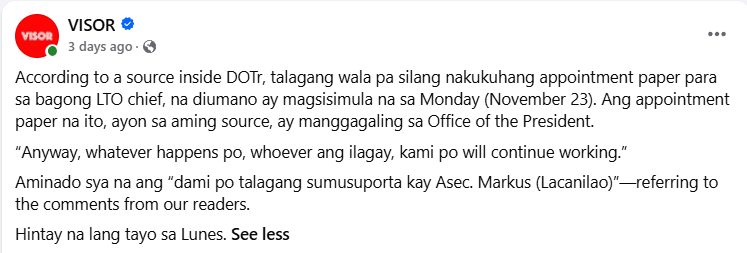
Image from the Official FB Page of Visor
The VISOR Issue and the Bigger Question About LTO Leadership
The reported leadership shake-up has also attracted attention within the Philippine motoring community, including discussions involving VISOR, a motoring publication that regularly examines transportation issues and the experiences of Filipino motorists.
The controversy raises broader questions about the relationship between the LTO, transport stakeholders, and the motoring public.
For ordinary motorists, the most important question is not simply who becomes the next LTO chief.
It is whether the agency can consistently deliver fair, transparent, and reliable public service.
Will vehicle registration transactions become faster? Will driver’s license services improve? Will complaints and alleged irregularities be addressed? Will motorists and employees receive fair treatment? Will internal accountability receive the same attention as public-facing achievements?
These are questions that deserve answers regardless of who occupies the leadership position.
Public Service Should Be Examined From Both Sides
Government agencies should be evaluated not only through their accomplishments but also through their internal practices.
A leadership change should not automatically be interpreted as a political move, an attack on reforms, or proof of wrongdoing. Likewise, support for an incumbent official should not prevent legitimate questions about the institution’s operations.
If an official has delivered meaningful improvements, those accomplishments deserve recognition. But if there are concerns involving internal management, administrative decisions, or employee welfare, these also deserve proper examination.
Transparency must work both ways.
The public deserves to know what is working and what needs improvement. Government employees deserve a fair and accountable workplace, while citizens deserve institutions that serve without favoritism, intimidation, or misinformation.
No government official should be above scrutiny, and no government institution should be exempt from public accountability.
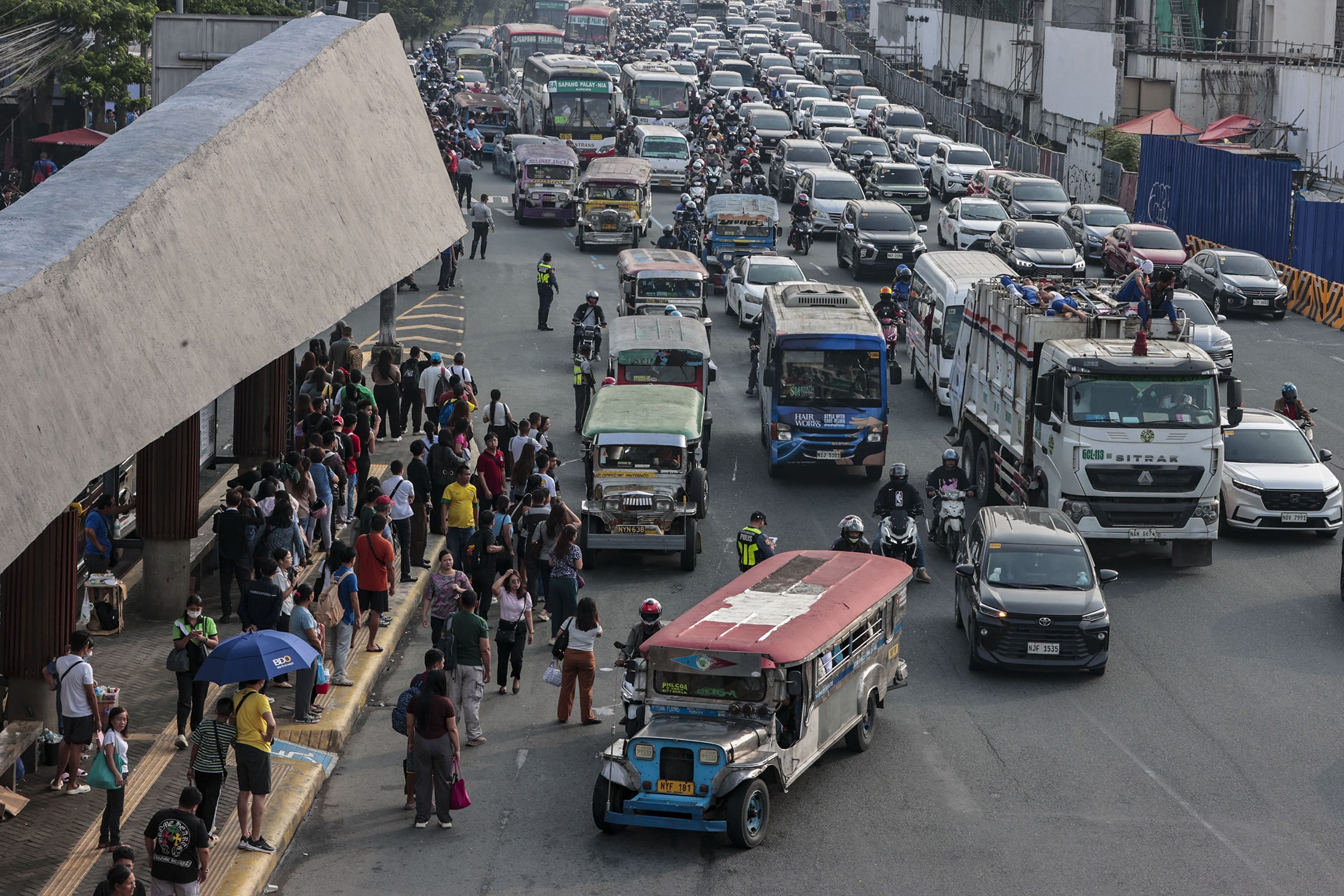
Commuters Should Not Be Forgotten
While the disagreement involves government leadership and the transport sector, ordinary commuters are among those most likely to experience the immediate consequences.
Workers traveling to offices, students attending classes, employees on shifting schedules, and small business owners who depend on public transportation may have difficulty finding available rides during the strike.
For low-income commuters, even a short transportation disruption can mean additional expenses, missed work hours, delayed appointments, and lost income.
The government has announced assistance measures to help commuters affected by the strike, including free rides along selected routes and the deployment of personnel to maintain public safety and manage traffic.
Nevertheless, the situation highlights the need for meaningful dialogue between government authorities and transport organizations.
The public should not become the unintended casualty of disagreements between government officials and transport groups.
The Bigger Issue: Filipinos Deserve the Whole Truth
The MANIBELA transport strike is more than a disagreement over the leadership of one government agency. It is also an opportunity to discuss how Filipinos evaluate public institutions.
We should not allow personalities, political affiliations, public relations campaigns, or social media narratives to dictate what we believe.
Look at the accomplishments, but also examine the shortcomings. Recognize improvements, but do not ignore legitimate concerns. Listen to transport groups, government officials, employees, and ordinary citizens, but always verify their claims.
A government agency should never be judged solely by what it wants the public to see.
What happens inside the institution matters just as much as what happens outside.
Whether Markus V. Lacanilao remains as LTO chief or another official takes over, the responsibility of the agency remains the same: serve the Filipino people with honesty, fairness, transparency, and accountability.
At the end of the day, leadership is not measured by publicity, popularity, or the number of good things presented to the public. It is measured by the integrity of decisions, the treatment of people, the transparency of operations, and the actual quality of public service.
Filipinos deserve more than a good-looking government agency. They deserve an honest, accountable, and trustworthy one.
PH NEWS WATCH | Philippine News Happenings and Updates
Informing the public. Examining issues. Giving Filipinos a voice.