
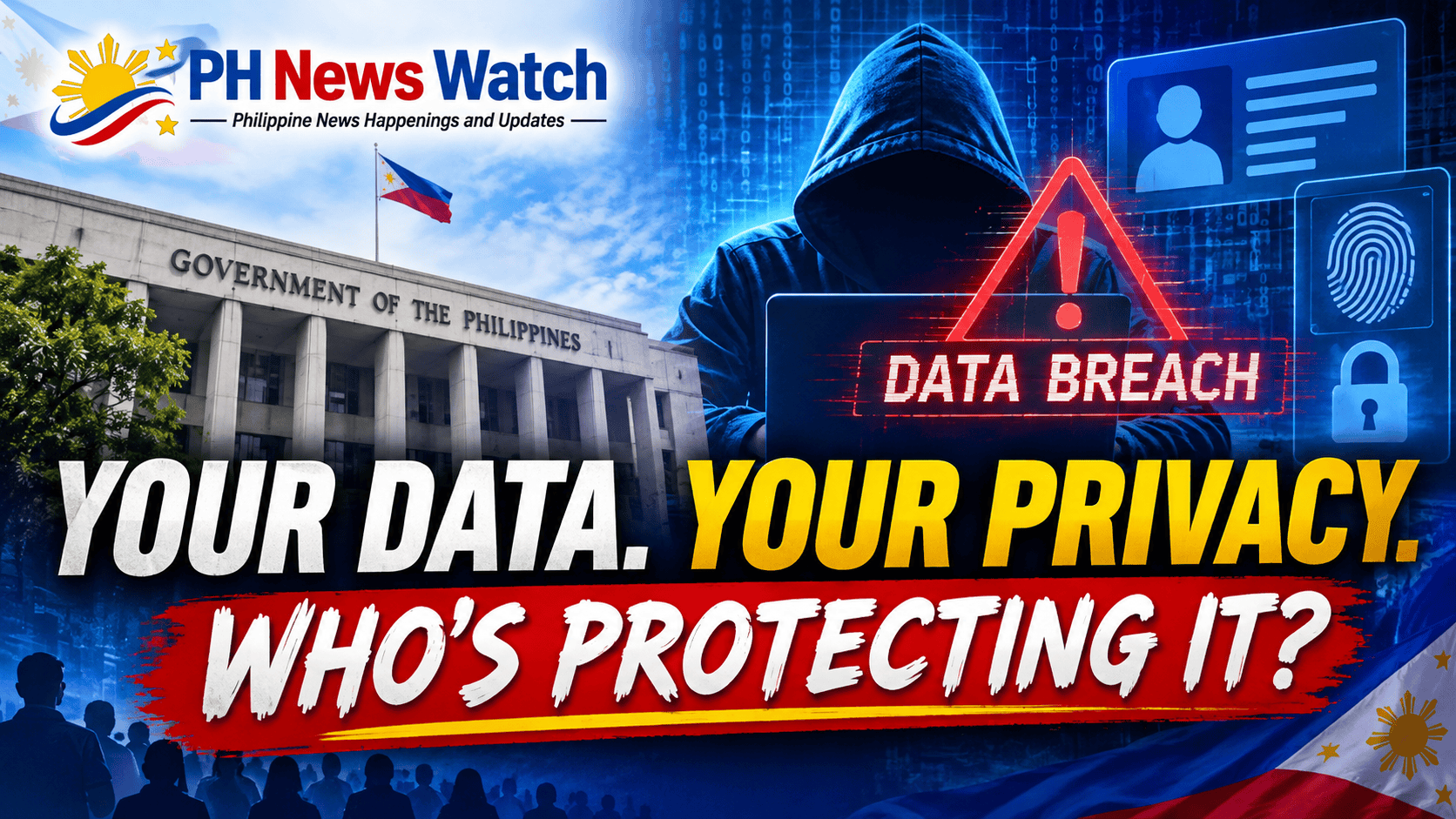
November 12, 2026 – MANILA, Philippines — Growing concerns over cybersecurity and the protection of personal information have placed Philippine government agencies under scrutiny following reports of data breaches involving several government institutions.
The National Privacy Commission (NPC) confirmed on November 10 that it had received personal data breach notifications from 10 government agencies, raising questions about the security of information entrusted to public institutions.
Among the agencies identified were the Department of Information and Communications Technology (DICT), Bureau of Internal Revenue (BIR), Department of Labor and Employment (DOLE), Department of Justice (DOJ), Securities and Exchange Commission (SEC), Philippine Coast Guard (PCG), Department of Trade and Industry (DTI), Philippine Amusement and Gaming Corporation (PAGCOR), Presidential Commission on Good Government (PCGG), and the Department of Science and Technology’s Philippine Institute of Volcanology and Seismology (DOST-PHIVOLCS).
The incidents have renewed public concerns about how government institutions collect, store, manage, and protect the personal information of millions of Filipinos.
Personal Information at Risk
For ordinary Filipinos, government databases contain some of the most important personal records they own.
These may include taxpayer information, employment records, government identification details, business registrations, personnel information, and other sensitive personal data.
Such information is routinely submitted when citizens apply for government services, register businesses, process documents, pay taxes, or access public assistance programs.
The possibility of unauthorized access to these records creates concerns that extend beyond cybersecurity.
Exposed personal information can potentially be exploited for identity theft, phishing attacks, fraudulent transactions, impersonation, and other forms of online scams.
For many Filipinos, the concern is straightforward: if personal information is entrusted to government institutions, how can citizens be assured that it is properly protected?
BIR Acknowledges Possible Exposure of Taxpayer Information
One of the agencies responding to the cybersecurity incidents is the Bureau of Internal Revenue.
In an advisory dated November 10, the BIR acknowledged cybersecurity incidents reported on November 6 and 7. The agency said it had taken steps to preserve evidence, prevent further exposure, and determine the extent of potentially affected records.
According to the BIR’s initial findings, certain taxpayer profile information may have been exposed. However, the agency stated that its internal database infrastructure remained intact and that no taxpayer information had been modified or lost. It also said that records involving tax filing and payments had not been compromised.
The BIR is coordinating with the Cybercrime Investigation and Coordinating Center (CICC) and the DICT’s National Computer Emergency Response Team (DICT-NCERT) to investigate the incidents.
The agency also advised taxpayers to update their account credentials, enable multi-factor authentication, monitor account activities, and remain vigilant against suspicious communications.
More Alleged Cyberattacks Under Investigation
Beyond the 10 agencies that formally submitted breach notifications, reports of other possible cybersecurity incidents have also circulated online.
The CICC disclosed on November 12 that investigators were examining alleged hacking incidents involving around 20 government agencies.
However, authorities are still determining whether the information being advertised by alleged hackers consists of newly stolen records or previously exposed datasets being circulated again.
This distinction is important. An online claim of possessing government information does not automatically establish that a new breach occurred or that the data came from the agency being named.
The National Privacy Commission has likewise emphasized that reported data leaks must be properly investigated before conclusions can be made regarding the compromise of personal information and possible violations of privacy regulations.
Government Accountability and the Data Privacy Act
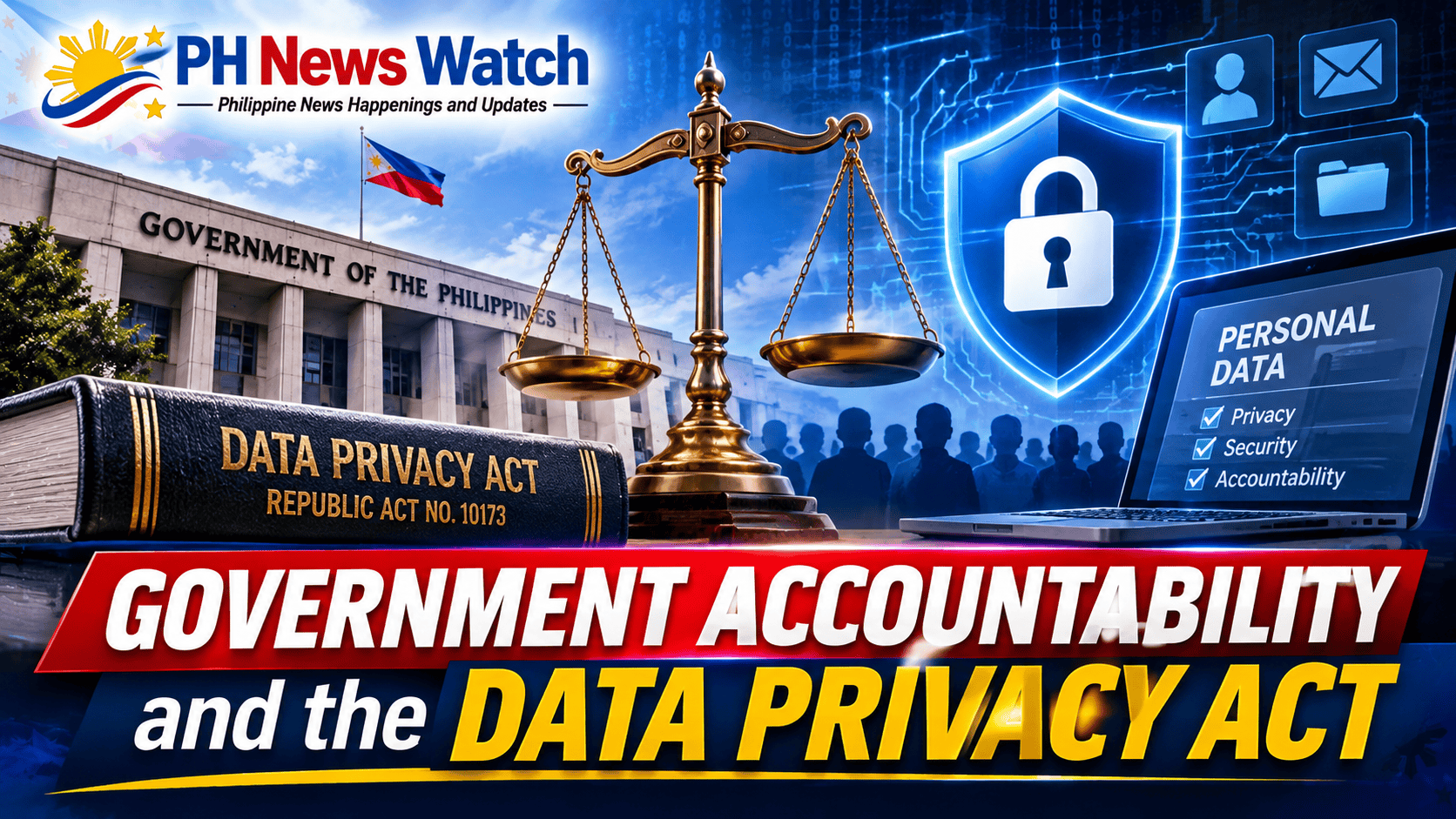
Under Republic Act No. 10173, or the Data Privacy Act of 2012, government agencies and other personal information controllers have a responsibility to implement reasonable and appropriate security measures to protect the personal data under their custody.
The law also establishes obligations concerning personal data breach notifications.
Under applicable NPC rules, organizations must notify the Commission and affected individuals within the prescribed 72-hour period when a breach meets the requirements for mandatory notification.
The NPC has also reminded government institutions that outsourcing information technology services or data processing operations does not remove their responsibility to protect personal information.
This means that even when third-party contractors manage government systems, the agencies responsible for the information must still ensure that appropriate safeguards are in place.
For taxpayers, employees, business owners, and other citizens, accountability should not end with the submission of a breach notification. Understanding what happened, identifying affected records, addressing vulnerabilities, and informing affected individuals are equally important.
What Should Filipinos Do to Protect Themselves?
While investigations continue, citizens should take practical steps to protect their personal information.
Here are some important reminders:
- Be cautious of suspicious messages. Do not immediately trust emails, text messages, or private messages claiming to come from government agencies.
- Avoid unfamiliar links. Do not click suspicious links or download unexpected attachments, especially those requesting personal information.
- Secure your online accounts. Use strong and unique passwords and enable multi-factor authentication whenever available.
- Monitor your financial accounts. Regularly check bank transactions, online accounts, and other services for suspicious activities.
- Verify official announcements. Access government services through their legitimate websites and verified communication channels.
- Report suspicious activities. If you encounter possible identity theft, phishing, or unauthorized use of your personal information, report it through the appropriate authorities.
Public Trust Must Go Hand in Hand With Digital Transformation
The Philippine government’s continued adoption of digital services offers convenience and faster access to public transactions. Online applications, electronic records, digital identification, and automated government systems are becoming increasingly important in delivering public services.
However, digital transformation also comes with significant responsibilities.
Every government database contains information entrusted by citizens who expect their personal records to remain confidential and protected.
Cybersecurity should not simply be treated as a technical requirement or an additional expense. It must be considered a fundamental part of public service delivery.
The recent incidents should encourage government institutions to strengthen their cybersecurity infrastructure, conduct regular security assessments, improve access controls, maintain reliable backup systems, and establish effective incident response procedures.
For ordinary Filipinos, the issue goes beyond hacking incidents and leaked databases. It concerns privacy, security, accountability, and the public’s confidence in the institutions responsible for protecting their information.
PH News Watch | Technology & Public Affairs