
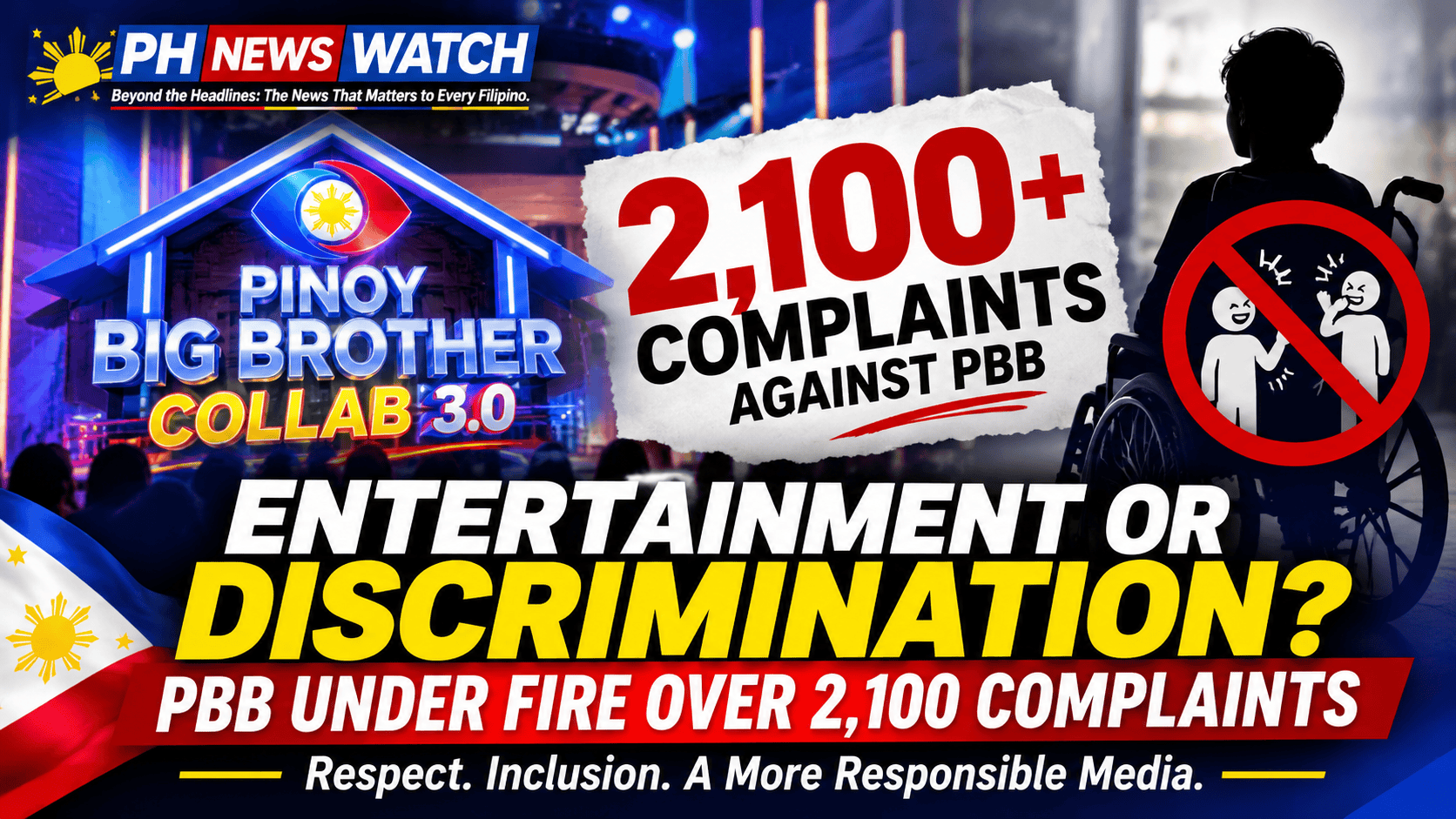
A reality television show that has entertained millions of Filipinos is now facing serious public scrutiny after receiving more than 2,100 complaints over various controversies, including an incident involving the alleged imitation of speech associated with persons with disabilities (PWDs).
Official Image of PBB Collab 3.0 from GMA Website
The controversy surrounding Pinoy Big Brother: Collab 3.0 has sparked widespread discussions on social media, raising an important question: Should everything be considered entertainment, even when it risks hurting the dignity of other people?
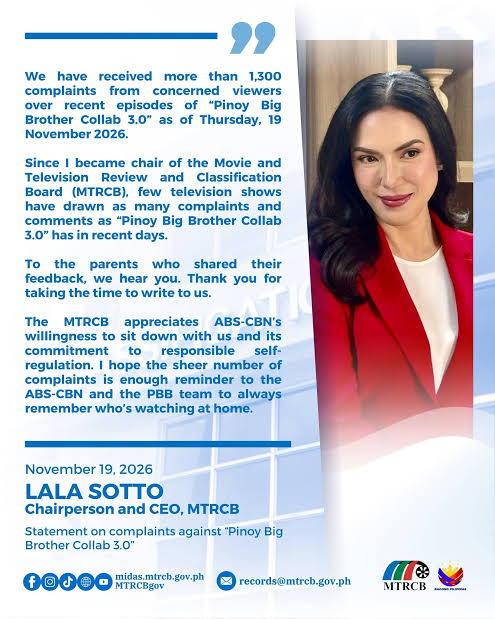 Image from the Official FB Page of MTRCB
More Than 2,100 Complaints Reach MTRCB
The Movie and Television Review and Classification Board (MTRCB) confirmed that it received more than 2,100 complaints against the reality show over a two-week period.
One of the concerns involved a circulating video clip showing some housemates allegedly imitating speech characteristics associated with persons with disabilities.
Following the concerns raised by viewers and the National Council on Disability Affairs (NCDA), the MTRCB scheduled discussions with the council on November 24, 2026.
The issue has also prompted calls for stronger editorial supervision and greater disability sensitivity, particularly in reality television programs where interactions are often unscripted.
The controversy has since expanded beyond the original incident. On November 24, the MTRCB announced that it had summoned GMA Network, ABS-CBN Corporation, and the PBB production team to appear before its Hearing and Adjudication Committee on November 26.
The hearing will address complaints involving alleged unfair editing, bullying, objectification, violations of personal boundaries, inconsistent enforcement of house rules, preferential treatment, and insensitivity toward PWDs.
The networks and production team will have an opportunity to explain their side. No final regulatory determination has been announced.
Persons with Disabilities Deserve Respect, Not Ridicule
For many Filipinos, the issue goes beyond a television program or the actions of individual housemates.
Persons with disabilities already face challenges involving accessibility, employment opportunities, discrimination, and social acceptance. Making their speech patterns or physical conditions a subject of ridicule can reinforce harmful stereotypes.
Disability awareness should not be treated as an optional consideration in entertainment.
A person’s disability is not a costume, a character impression, or a convenient source of comedy. Behind every disability is a person who deserves the same dignity, respect, and opportunities as everyone else.
Television programs have a responsibility to consider how their content influences public attitudes, especially among younger viewers.
Freedom of Expression Comes With Responsibility
Entertainment programs have creative freedom. Comedy, improvisation, and unscripted interactions are part of reality television.
However, creative freedom should also come with responsibility.
There is a difference between making people laugh and making a particular group of people feel humiliated or excluded.
The responsibility does not necessarily rest on the participants alone. Production teams, editors, content supervisors, and broadcasting networks also have important roles in reviewing how scenes are presented to the public.
The NCDA has called for more responsible editorial judgment and dignified representation of persons with disabilities across television and digital platforms.
Disability sensitivity orientations for production crews and talents, together with stronger editorial review, could help prevent similar controversies.
The Bigger Question: What Are We Teaching the Next Generation?
Television and social media remain powerful influences on Filipino culture.
When millions of viewers watch a particular program, the actions and conversations presented on screen can shape how people understand and treat others.
If discriminatory behavior is presented without sufficient context or sensitivity, viewers may mistakenly interpret it as acceptable humor.
This is particularly concerning for children and young audiences who are still developing their understanding of respect, inclusion, and diversity.
The conversation should not simply be about whether a particular housemate intended to offend someone. It should also examine the impact of the content and the responsibility of those who decide what eventually reaches the audience.
Accountability Should Not End With Public Apologies
The MTRCB’s investigation and the concerns raised by the NCDA provide an opportunity for the entertainment industry to examine its standards.
The objective should not be to encourage online harassment or public humiliation of individual housemates. Cyberbullying and personal attacks do not solve discrimination.
Instead, the focus should be on accountability, education, and meaningful improvements in television production.
Networks and production teams should review their editorial practices, provide disability sensitivity training, and establish clearer safeguards for content involving vulnerable or marginalized communities.
The public also deserves transparency regarding the results of the regulatory proceedings.
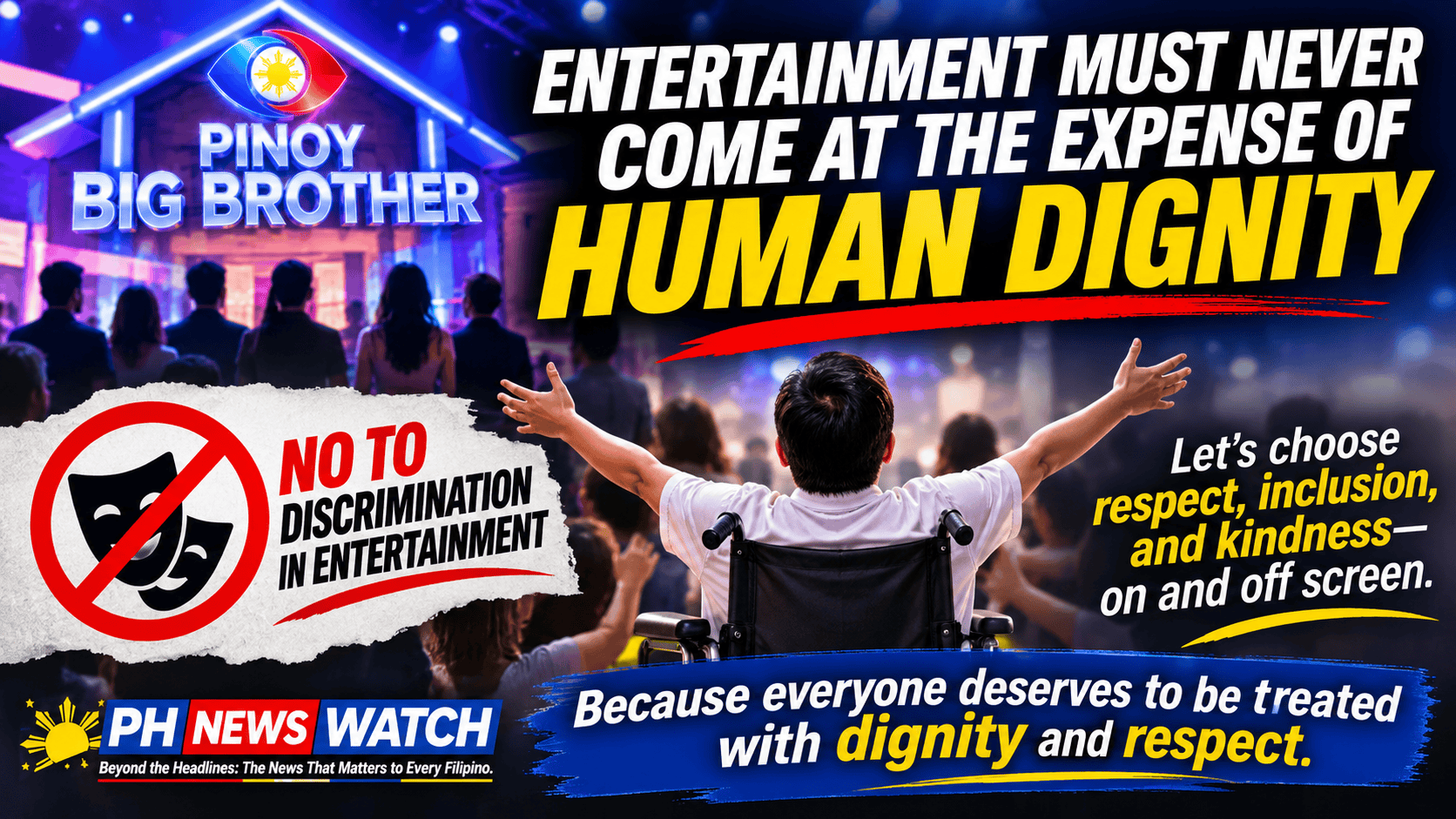
Entertainment Must Never Come at the Expense of Human Dignity
At the end of the day, reality television is entertainment. It is designed to attract audiences, generate conversations, and capture public interest.
But entertainment should never become an excuse to disregard the dignity of another person.
The more than 2,100 complaints should serve as an opportunity for television networks and content creators to reflect on how their programs affect society.
Filipinos can enjoy reality television, support their favorite housemates, and participate in online discussions while still demanding responsible content.
Because being entertaining is one thing. Teaching people to respect one another is another—and both should be possible.
PH News Watch believes that responsible media, public accountability, and respect for every Filipino should always go hand in hand.
PH News Watch | November 24, 2026