
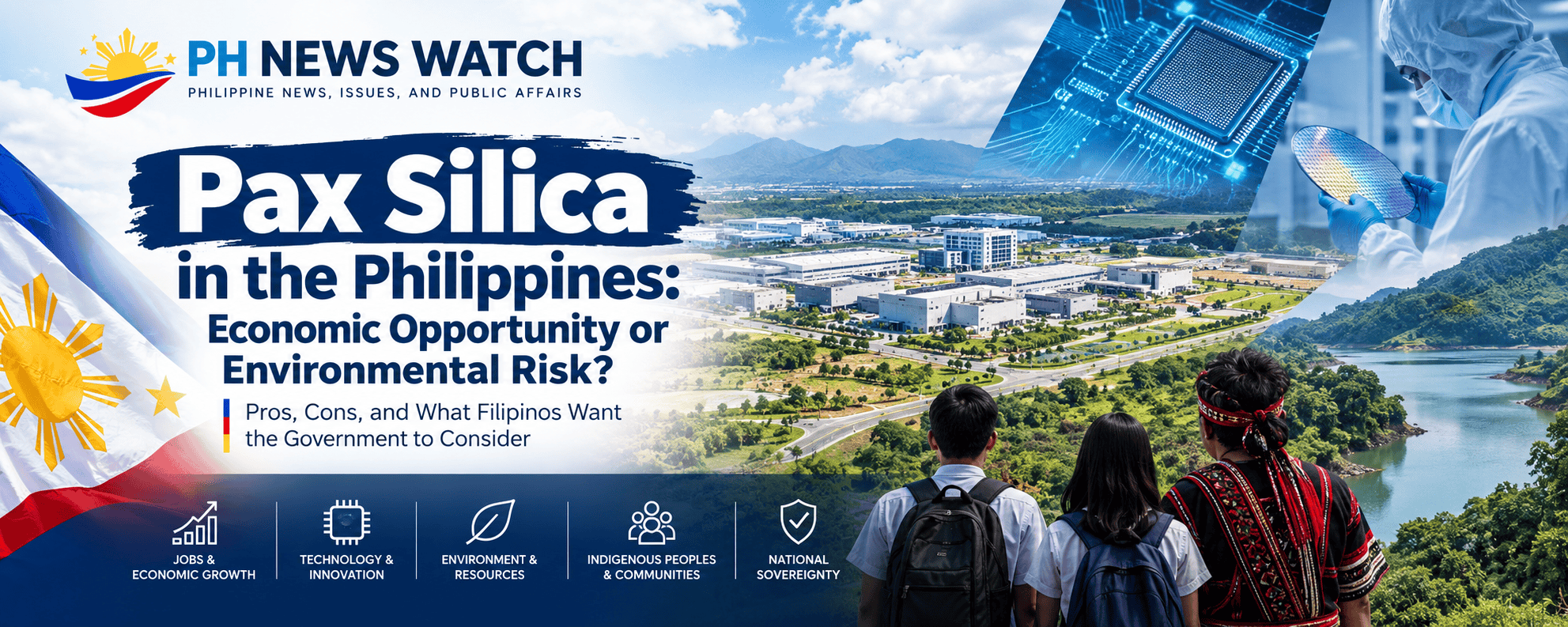
The Philippines’ participation in Pax Silica, a United States-led initiative focused on artificial intelligence (AI), semiconductors, and advanced technology supply chains, has sparked discussions about economic growth, job creation, environmental protection, and national sovereignty.
The proposed industrial hub in New Clark City, Tarlac, is intended to attract international investors and strengthen the country’s position in the global technology industry. While the project offers significant opportunities, Filipinos are also asking whether its benefits will outweigh its potential risks.

What Is Pax Silica?
Pax Silica aims to strengthen international cooperation in semiconductor manufacturing, AI infrastructure, critical minerals, and advanced industries.
The proposed Philippine industrial hub forms part of the broader Luzon Economic Corridor. According to government projections, the development could attract billions of dollars in investments and generate more than 130,000 jobs. However, these figures are targets, not guaranteed results.

Pros: Potential Benefits for the Philippines
1. More jobs for Filipinos – The project could create employment for engineers, IT professionals, technicians, skilled workers, and graduates while supporting local businesses.
2. Stronger technology industry – Investment in semiconductors, AI, and advanced manufacturing could help the Philippines move toward higher-value industries and reduce dependence on basic manufacturing.
3. More foreign investment – New businesses could stimulate economic activity, improve infrastructure, and create opportunities for communities in Central Luzon.
4. Skills development and technology transfer – Partnerships with universities and training institutions could help Filipino graduates gain specialized skills and encourage local innovation.

Cons: Risks and Concerns
1. Environmental impact – Industrial facilities may require substantial water and electricity and generate wastewater and other pollutants. Strong environmental assessments and monitoring are essential to protect communities and natural resources.
2. Indigenous Peoples’ rights – Questions about ancestral land, cultural heritage, and local livelihoods must be addressed through meaningful consultation and compliance with applicable laws, including free, prior, and informed consent where required.
3. Unequal economic benefits – The project may not benefit ordinary Filipinos equally if technical positions require skills that local workers lack or if local businesses are excluded from supply chains.
4. Dependence on foreign companies – Without meaningful technology transfer and local industry development, the Philippines risks remaining dependent on foreign investors for advanced technology and expertise.
5. Geopolitical concerns – Closer technology cooperation with the United States could create opportunities, but the government must protect Philippine sovereignty and maintain an independent approach to international relations.

What Do Filipinos Think?
Filipino perspectives differ. Some students and business advocates see Pax Silica as an opportunity for investment, skilled employment, and industrial development. Others, including environmental and community advocates, have raised concerns about water resources, mining, Indigenous rights, transparency, and the distribution of economic benefits.
These views show why the government must provide reliable information and allow affected communities to participate in decision-making. The opinions of individual groups should not automatically be treated as representing all Filipinos.
Recommendations: What Should the Government Do?
To ensure that Pax Silica benefits the country, the Philippine government should:
- Ensure transparency: Publish relevant agreements, investment commitments, incentives, and public expenditures.
- Protect the environment: Require independent assessments of water availability, energy demand, pollution, and ecological impacts.
- Respect community rights: Protect Indigenous Peoples, ancestral lands, cultural heritage, and local livelihoods.
- Prioritize Filipino workers: Provide scholarships, technical training, apprenticeships, and fair access to quality jobs.
- Support local industries: Encourage technology transfer, research partnerships, and Filipino-owned suppliers.
- Strengthen accountability: Make project performance, employment figures, and environmental monitoring results accessible to the public.
Development Must Benefit Filipinos
Pax Silica could help the Philippines attract investment, create skilled jobs, and strengthen its technology industry. However, economic growth must not come at the expense of the environment, Indigenous Peoples, local communities, or national interests.
The project’s success should be measured not only by investment figures but also by the quality of jobs created, opportunities for Filipino businesses, technology transferred, and resources protected.
Pax Silica should be judged by its results, not its promises. With transparency, strong safeguards, and meaningful public participation, it could support national development. Without them, its economic benefits may not justify the potential social and environmental costs.
What do you think about Pax Silica? Should the Philippines fully support the project, reject it, or proceed only with stronger safeguards? Share your views respectfully.
PH News Watch — Philippine News, Issues, and Public Affairs.