
MANILA, Philippines — October 11, 2026 — A proposed restriction on social media use among minors is gaining attention in the Philippines, prompting discussions among parents, students and internet users about children’s safety in the digital world.
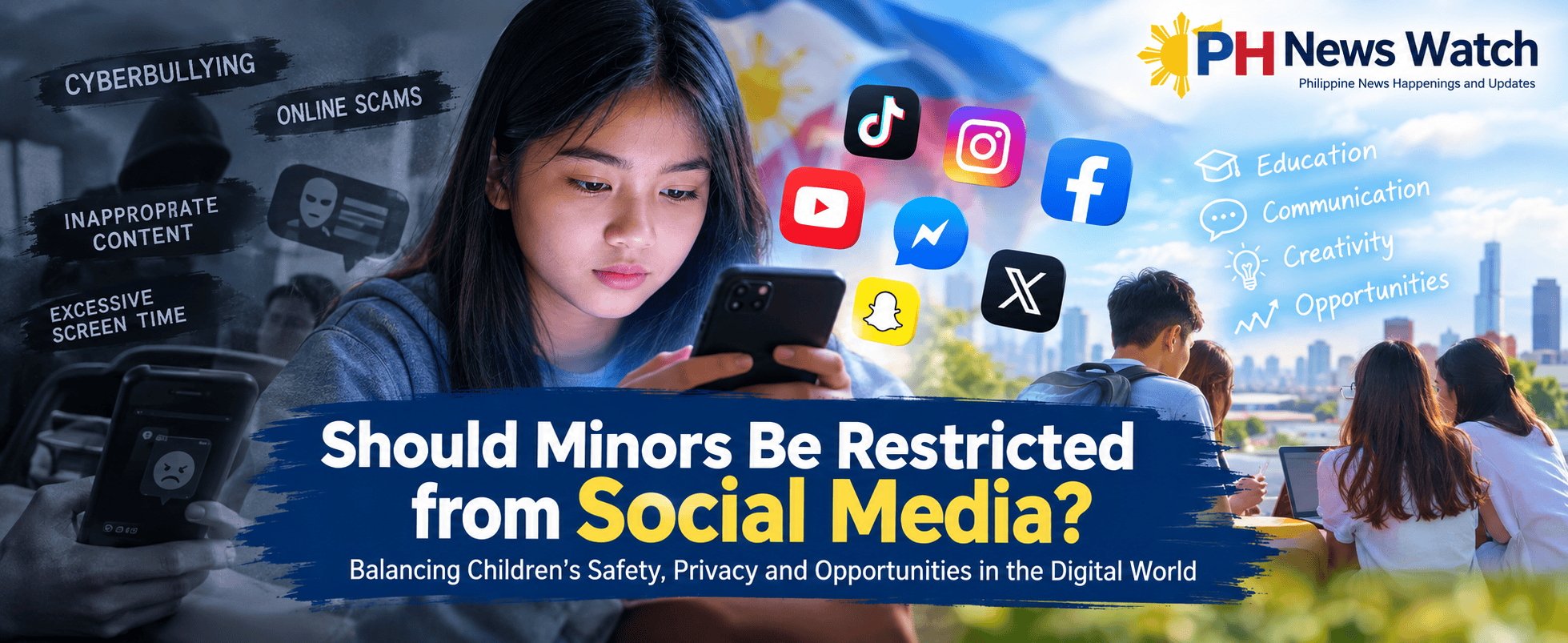
As social media becomes part of everyday life, concerns over cyberbullying, online scams, inappropriate content and excessive screen time have fueled calls for stronger rules to protect young users. However, the possibility of limiting minors’ access to popular platforms has also raised questions about privacy, freedom and the role of parents in guiding their children online.
Protecting Children From Online Risks
Supporters of tighter social media restrictions believe children need greater protection from potentially harmful online experiences. They argue that younger users may struggle to recognize online manipulation, misinformation and dangerous interactions with strangers.
Parents have also expressed concerns about the effects of prolonged screen time on children’s sleep, studies and personal relationships. For advocates of restrictions, setting a minimum age for social media access could help reduce exposure to these risks.
They believe social media companies should take greater responsibility for ensuring that children cannot easily bypass existing age requirements.
Students May Lose More Than Entertainment
Despite these concerns, restricting access to social media could create challenges for students who rely on digital platforms for school announcements, group projects, educational content and communication with classmates.
For many young Filipinos, social media is also a space for creativity, self-expression and participation in online communities. A broad restriction could limit these opportunities, particularly for students who depend on digital resources to support their learning.
Privacy is another issue. If platforms are required to verify users’ ages, questions remain about how personal information would be collected, stored and protected.
Some users may also attempt to bypass restrictions by creating alternative accounts or providing false birth dates, potentially making enforcement difficult.
Should Parents or the Government Decide?
The proposal has brought renewed attention to the responsibilities of parents, schools, technology companies and the government in keeping children safe online.
Some believe age restrictions should be supported by stronger parental controls and better monitoring of harmful content. Others argue that digital literacy should be prioritized so children can learn to recognize risks and make responsible decisions when using online platforms.
Teaching young people how to identify scams, report cyberbullying and protect their personal information could complement any restrictions introduced by lawmakers.
Technology companies could also strengthen privacy protections, improve age-appropriate settings and respond more effectively to reports of abuse.
What Happens Next?
The specific requirements of any proposed restriction will depend on the legislative process, including the age limits, platforms covered and enforcement mechanisms ultimately adopted.
Until a measure is approved and takes effect, the proposal should not be treated as an existing nationwide ban on minors using social media.
The debate highlights the difficulty of balancing children’s protection with their access to communication, education and digital opportunities.
A Safer Digital Future for Filipino Children
As discussions continue, one question remains at the center of the issue: Is restricting access to social media enough to protect children, or should greater attention be given to making online platforms safer?
For Filipino families, the answer may involve a combination of responsible parenting, digital education, effective platform safeguards and clear government policies.
Ultimately, the goal is to ensure that young people can navigate the digital world without being unnecessarily exposed to harm or deprived of valuable opportunities to learn and connect.